
As mentioned, I am preparing a book Cor Jesu Sacratissimum for publication. A provisional subtitle for this volume is: From Materialism and the New Age to the Catholic Mystery.
As the subtitle suggests, my book attempts a certain meditation on three worlds of my experience. First, there is the arid, secular, materialist and hyper-capitalist culture that increasingly threatens to scorch us alive. Second is the New Age subculture, to which many dying in this burning desert of materialism, turn to in reaction. And lastly, of course, there is the beating heart of the Catholic Mystery, often buried and invisible under countless misperceptions of modern society.
It might be mentioned that I was once very deeply committed to the New Age, including during a time as a member of the Findhorn Community in Scotland – perhaps the leading New Age centre in the world.
I thought today I would present an extract of the book, as I continue revising it.
I hope that through the course of this book some may gain insight into this phenomenon of New Age phenomenon that increasingly dominates the lives of the spiritually hungry in the West. Yes I hope to provide insight and perhaps stimulus for further research. But the scope of this book does not include a comprehensive exegesis of the New Age phenomenon.
Still, I point. I point in certain directions, which I think are fruitful for understanding the hidden unity of the New Age movement. For example, having stepped beyond the New Age cafeteria, it now appears to me as a movement of people, which has its main focus in the countries of Protestant heritage.
While I lived at Findhorn, for example, much was made of how cosmopolitan Findhorn was, bringing together a number of nationalities. These included those who actually lived in the community, as well as the thousands who poured through yearly as visitors.
Now, people from different countries certainly came to Findhorn. From Europe, came mainly British and Germans, as well as folk from some smaller northern European states. Thus, I recall meeting a surprising number of Dutch. There were also people from the New World lands largely settled from these countries. Thus there were Americans, Anglo-Canadians and Australians. All this was seen as very international.
What was less observed was how very few French, Italians, Spanish, Irish came and scarcely any Hispanics or others from the New World settled by Catholic peoples. No by and large, the international New Age culture that I have experienced at Findhorn and elsewhere does not stem from a Catholic heritage.
And if we can observe that the centre of the international New Age movement is bound to countries of Protestant heritage, we can go still further, I think. Its epicentre is the Anglophone world, and perhaps England most of all. And in their rejection of Protestant heritage and materialism, this group of people have turned to a stream of literature which it seems to me is far less universal and far more bound in time and culture than is commonly admitted.
The stream of literature I have in mind is one that stems to one degree or another from late nineteenth century Theosophy. Now this is not to say that this Theosophy is the only root of the New Age culture. As I will come to, other streams feed in as well, for example Freudian and Jungian psychotherapy which also arose from the same era. But here is my conviction, dear Reader, the deeper you will dig, the more you will find Anglophone Theosophy at the root of so much New Age thought.
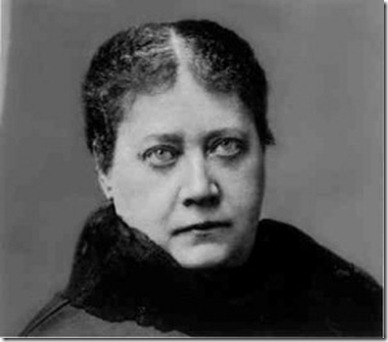
Anglophone Theosophy … Here I have in mind a current of writings initiated by Helena Petrovna Blavatsky and often known as simply H.P.B..
Blavatsky was a Russian, but a Russian who ventured far beyond her land to write her works in English, most notably The Secret Doctrine published in 1888. And these are writings with an avowedly anti-Christian and anti-Church tone, as well as writings which then gave impetus to a number of other English authors, who carried her Theosophical legacy into the twentieth century, Annie Besant, Charles Leadbeater and most significantly I believe, Alice A Bailey.
Taken as a whole, these Theosophical teachings served to introduce a vast panoply of esoteric ideas into Western culture. Publicly in the West, groups of people began to speak and write of concepts which had scarcely appeared in the West before.
Yes prior to Blavatsky, few indeed had ever heard at all of notions such as an astral plane, the human aura, chakras, “channeling” disincarnate entities and many other things that now continue to be perpetuated in the New Age movement. But for the moment, I am not so concerned with these propositions about an esoteric nature of reality, as I am with certain very basic ramifications in Theosophy of social and even political consequence.
What do I mean? Let me respond with a concrete example. At the heart of the New Age movement, I have been suggesting there is the tenet of one single spiritual path, with the different religions as limited expressions thereof. Accompanying this doctrine, if not central dogma, is the idea that transcending “limited” religion represents an evolutionary development.
Humanity is now meant to evolve beyond religion, with its so-called divisive concepts, sectarianism and dogma. Religion-less spirituality – or at least a spirituality where religion is greatly reduced in significance – is frequently seen as destined to be the paradigm for a New Age.
All of this finds its antecedents in the Theosophical stream. Within that stream in fact, it is linked to the zodiac sign of Aquarius. In this idea of the Aquarian paradigm, qualities are attributed to the previous paradigm of Pisces, including many Christian notions of sin, devotion and so forth, which are no longer seen as appropriate as they perhaps were, in the ‘previous age of Pisces’.
The consequences are many. They entail a certain shift from the notion of Grace – and certainly Grace as mediated by the hierarchy of the Church! – to a doctrine more oriented toward “working on oneself.” Yes I believe we have an implicit Pelagian doctrine in this movement which claims so frequently to have transcended doctrine!
Though frequently denied, tenets such as these carry real implications. For how frequently I have seen this “holistic” idea it is used to ridicule, marginalise and exclude Christianity as something “Old Age”, hopelessly outmoded and irrelevant to a dogmatically asserted “spirit of the times”!
How often since I turned to the Grace of the Church have those of a New Age persuasion expressed to me the idea of my retrograde movement “back to religion”! Yes, yes, an Irish woman once assured me, I can see why someone would turn back to the safety and comfort of the Church.
And far more charitably, a friend of mine from Findhorn once tried to affirm me: “It’s so good you want to do something to heal the Church.” To heal this poor, backward, limping Church! I turned to him and said: “It is not I who am healing the Church! It is the Church which is healing me!”
I suspect that my response was surprising indeed to him. For so ingrained is the idea that the Church belongs to an old age now superseded, though perhaps we New Agers who know better might here and there condescend to lend a helping hand in our self-evident superiority … And what of the idea that the Divine Grace mediated by the Catholic Church could be of a nature of the greatest imaginable healing? One can live comfortably for decades in New Age milieux, without such a novel idea even beginning to surface in one’s consciousness …
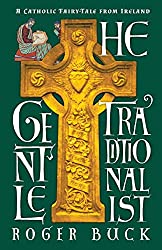
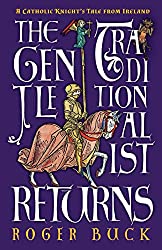
UPDATE 2017: Since the above was posted, I have started a YouTube channel with videos where, among other things, I address these these themes. Here is one, talking about my life at Findhorn, the New Age debt to Blavatsky and my conversion to the Catholic Faith. (Below are also two adverts for books I have written about the New Age and Catholic faith and since published by Angelico Press.)
Foreword for Monarchy by Roger Buck
Buying Books at Amazon Through These Links Gives Us a Commission. This Supports Our Apostolate. Thank You if You Can Help Us Like This!
Comments
comments are currently closed
12 responses to “Findhorn, Helena Petrovna Blavatsky and the New Age Movement”
It was for me as well a revolution in thought, in heart and in spirit to consider the Church as the primary via of Grace coming down from the Fount, the Blessed Holy Trinity. My path was not, however, a direct one from New Age to Christianity. From age 13-19 approx. I was a dabbler in “New Age.” Exploring a mish-mash of Eastern Religions (particularly as interpreted by people like Alan Watts), Shamanic/Aboriginal Spirituality, Wicca and “New Age.” My journey into Tradition came by returning to my ancestral faith, Judaism. I explored Orthodox Hasidic and “Renewal” forms. In my mid-twenties certain inner events drew me to explore Sufism (in Universal and Islamic forms) and Christianity. My perspective in my late twenties was an Univeralist/Unitive mysticism drawn primarily from Judaism, Christianity and Islam. But something has drawn me from this perspective to one that is certain on the primacy of Christianity and the redemption that has come through Jesus Christ. Tomberg helped by emphasizing the principle of continuity in various places in his Meditations. This was inspiring to me as I could allow all that was valuable in my previous strivings to converge in Christ and His Church.
Thank you for this sincere, moving expression of this “revolution” and more, Edwin. I am appreciating listening to you and actually want to listen and study your experiences and thoughts more. I firmly intend to, in fact. Many demands are slowing me down, however. But again thank you, Unknown Friend …
[…] But those who have lived in Catholic countries will readily see that New Age-ism does not take hold there in anyway like the same way it does in the secularised countries of Protestant heritage. (For anyone interested in this, I have written more to back up this notion here). […]
[…] hardly as ‘universalist’ as it likes to claim. It is above all an Anglo-American phenomenon. (See, for example, here and also […]
[…] than being “universal”, New Age or “holistic” spirituality is above all an Anglo-American movement. Herewith a major theme of the upcoming […]
[…] Second, there is the New Age movement, which I devoted nearly twenty years of my youth to, including a spell at Findhorn in Scotland (perhaps the world’s leading New Age community). […]
How many of the four corners of the Earth speak English?
NW does whether we mean Alaska or semidetached British Isles.
SW speaks either Spanish (Chile) or English and Afrikaans (South Africa).
SE speaks English whether you speak of Singapoor or Australia.
NE doesn’t speak natively English, if you mean Sakhalin or Japan, but they certainly know English. So does Tierra del Fuego to some extent.
From “four corners” (up to you if I got these correct) will Gog and Magog come.
Also, HOLYBIBLE in ascii code is 666. Not true for Heilige Bibel, not true for Sagrada Escritura, and so on, but for Holy Bible, yes.
Thank you, Hans-Georg.
One thing that is so very striking is how much this has advanced since Blavatsky’s time, in terms of her clear agenda …
Sometimes I wonder what our world would be like if English had failed to win the race to become the global language.
Je regrette ca. Et aussi mon mauvais français!
Roger,
As for the New Age view of Monotheism as “retrograde,” yes, I hear this all the time, and not just from active New Agers but from bog-standard secularists. It was from Constance Cumbey (who did the seminal Christian work on Blavatsky and Bailey, history you highlight here but which most people are ignorant of) that I first learned that the line in the Great Invocation about sealing the “door where evil dwells” is actually a veiled reference to the planned destruction of Monotheism. Craig has more on this at his most excellent blog, Crosswise:
https://notunlikelee.wordpress.com/tag/door-where-evil-dwells/
A, belated thanks for this and that very useful link.
I get tongue-tied trying to speak about the matters you raise, that link raises – even though they are extremely important.
Truly fathoming the grave things going on here and articulating them properly is a mighty, mighty task.
The Bailey material is very dense, very difficult and I think these Christians commenting on it are sometimes misinterpreting, making leaps that are not quite justified. That is my impression of Cumbey at any rate, whom I haven’t looked at for years.
BUT … this is not a criticism. I am very grateful for their efforts. Again, that page is very, very useful. Truly it might take a genius to do justice to this material properly …
Even with my background in Bailey – read about half her oeuvre of 10, 000 pages – I still think I’d need a research grant, team of assistants and years to get at the core of this …
So, I go into it in my big book – coming out next year – but still I hardly feel I’m scratching the surface.
And yet it is immensely important. Though most New Agers don’t realise it and aren’t capable of grasping Bailey and Blavatsky’s sheer density, they are nonetheless permeated through and through by ideology which owes enormously to Theosophy.
Grim stuff. Not for the faint-hearted or superficial …
Roger,
I forgot about this comment and then it came up on my RSS feed!
I appreciate your points but want to add that Cumbey is a lawyer who graduated I believe at or near the top of her law school class. Her papers are archived at the University of Michigan, one of the top “public Ivies” in the U.S. Whether you agree with all her conclusions or not, it’s apparent when you read her writing or listen to her lectures that Cumbey, like yourself, is a high-level intellectual who is well able to parse the voluminous material of Bailey and Blavatsky (including its deeply anti-Semitic and anti-Catholic character) because God gave her the intellectual gifts to do so. With all that said, I don’t deny that Bailey and Blavatsky are seductive, for if something deceives it will deceive by its likeness to the truth.
I don’t mean to be disagreeable and please know that I appreciate both you and Kim immensely, and that when I pray for Ireland (which I try to remember to do daily) I always include you both by name in my prayers.
[…] Findhorn, Helena Petrovna Blavatsky and the New Age Movement June 10, 2023 […]