2023 Update: What we have here is the third of a series of musings on Tomberg and the world tragedy, written many years ago, when this site started in 2009. For navigation purposes, we list and link the three parts here:
Authority … one has authority or competence to speak on things the more fully and consciously one has experienced it.
In writing of things New Age for example, I feel a certain degree of confidence, given that I have long, intimate involvement with this phenomenon. I completely identified with the New Age movement for many years, in a way that few traditional Catholics have.
Now that Valentin Tomberg led me from the New Age to Catholicism, it seems to me then, that I have something to offer in this regard. I can speak to Catholics about the sincere aspirations and serious dangers of New Age spirituality with “inside knowledge” as it were …
But Global Warming? And the kind of Spiritual, Social and Political Order it seems to me is needed to avert the threat – on an unimaginably enormous scale – of loss, loss of lives, species, civilisation?
What can I do but shudder? What authority do I have to utter anything?
Nonetheless the subject is very pressing and must be uttered in many contexts, certainly including that of traditional Catholicism.
Naturally, it is being raised in my life in many ways. As I recently reported here, an old friend of mine, who is a scientist and who blogs under the name of the Trimorph, sent me a e-mail about Global Warming, whose noble and searching nature could do nothing but evoke my respect – even if I have very serious disagreements with my friend about numerous things, including Christianity.
In a previous entry, I presented my friend´s searching, scientifically informed mail and in the responses a discussion ensued – which I extend here.
Click to See at Amazon—Or Continue Article Below
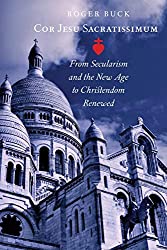
Books from Roger Buck
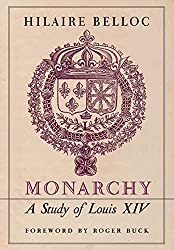
Foreword for Monarchy by Roger Buck
I choose this heading carefully. For as I say, I feel hardly competent in this regard. These will be my musings. Musing out-loud things I have been musing inwardly for years or musing with intimate friends. But under the heading of a “work-in-progress”, I plan to allow myself to utter many unfinished things …
In this series, I want to muse in response to what the Trimorph has said and what Edwin Shendelman has said at that entry, and perhaps in response to what others may care to contribute. To fully appreciate all of this, you may wish to see that original weblog entry here and its responses.
If my musings lack the coherency of more finished thinking, I take comfort in this webformat. The beauty of blogging, it seems to me, is that it lends itself to such incomplete and personal exchanges in a way that print does not. Here I go now…
My response to the Trimorph was apparently taken as criticism of certain activist initiatives to combat Global Warming. And perhaps my words were poor.
My intention was not so much to criticise, but to suggest my own view that far, far more was needed to address Global Warming than simply slogans or raising consciousness of the scientific data describing the problem – i.e. a need to reduce the CO2 concentration in the atmosphere, below 350 parts per million.
However crying that need may be, I personally have little faith that activism – by itself – directed towards such goals can be very effective.
The reason for this is that the problem is as I said before systemic, far greater than Global Warming itself. Global Warming forms but the perilous projection of an enormous iceberg.
For Global Warming it seems to me, is but a symptom of a vast disease afflicting humanity for centuries.
Or at least, I think this must be the conclusion of any traditionally-minded Catholic who has seriously reflected on the history of the post-medieval epoch. For such reflection inevitably points to a trajectory of increasing materialism, of which Global Warming is but the latest consequence.
Materialism … by this term I mean to suggest not only the commercial and concrete materialism with which we are all familar, but also a centuries long process of philosophical materialism, whereby reality was interpreted increasingly in reference to matter, matter alone …
A traditional Catholic who has studied the problem will see that for a very long time Catholic teaching has pointed to the serious danger of a society falling ever more deeply into materialism. One could point to numerous Popes, for instance, who it seems to me spoke to this effect with great prescience and serious moral concern.
But even beyond the teaching of the Magisterium, for any Catholic with faith in the supernatural gifts transmitted via the Church, is it not difficult to see it otherwise?
For any Catholic who feels acutely the importance of Sacramental Communion with Jesus Christ, is it not natural that one should be gravely concerned about the outcome of a civilisational trajectory increasingly deprived of the Sacraments and the Faith …?
And as a Catholic who feels the joy and strength coming from the Sacraments and the Faith – initiated by Christ for the Redemption of the World – is it any surprise to see that a society stripped of these things will turn to fill its emptiness with a voracious consumerist materialism?
And as a Catholic who cannot help but feel the Sacraments of the Holy Church impart moral seriousness, can I feel any differently as I look out on a culture of moral superficiality …?
I am well aware that many a modern mind will accuse me of a simplistic one-sidedness. I am also very aware that many a modern mind has not bothered to trouble itself much with Catholicism, nor felt the interior power of her Sacraments, nor paused even an instant to consider what the long term effects of a de-sacramentalised society over centuries might be …
Whatever the case, these are my musings. I cannot help but see Global Warming in the context of a de-sacramentalised society tending to ever greater materialism over centuries.
The non-catholic sociologist Max Weber noted that the societies of his time with more Protestants were also those with a more developed capitalist economy. And lacking faith in the Catholic Mystery, he concluded in his famous work The Protestant Ethic and the Spirit of Capitalism that certain ideas found in Protestantism had favoured the emergence of Capitalism.
And certainly many have noted that Catholicism has often promoted a more communitarian, less individualistic ethic. Commonly it is assumed that this is all to do conditioningideas.
Protestantism has been seen as conditioning people to a more worldly, less renunciatory and individualist attitude. Catholicism has been accused of conditioning people “to put up with suffering” and so forth.
But for us who believe in and feel the power of the Sacraments, why should we suppose that all of this is entirely to do with ideology? Could it not be that the loss of the Sacraments has been a contributory factor, at least? May I be forgiven for musing out loud notions so outrageous and scandalous to the modern mind?
Now I will be ruminating on these things not only as a Catholic who seeks to immerse himself ever more deeply in the Sacraments. But also as a Catholic immersed in many different currents of the Church. These include not only Papal teaching which seems to me relevant to these issues, including the most recent and magnificent encyclical of the Holy Father Caritas in Veritate, but also the little known legal and political Catholic works of Valentin Tomberg which I began exploring in this weblog here and which in a manner not unlike the recent encyclical, cry out for a different World Order.
Yes, many writings feed into my study, Papal, clerical, lay and secular … but I would be less than frank with you, dear Reader if I did not say that the writings of Valentin Tomberg have assumed a particular place, as I struggle to understand the solemn, tragic situation we find ourselves in at the dawn of the third millennium.
As I have indicated in this weblog before, I have been profoundly struck by Valentin Tomberg’s little known Catholic doctoral theses in Jurisprudence. Valentin Tomberg who once had sharply criticised the Church, but who converted amidst the horror of World War II. In these Jurisprudence theses, written shortly after his conversion, Tomberg considers what he regards as (as I have put it before at this weblog here):
a degenerating modern society – whose degeneration stems – he says – from its tendency in recent centuries to SEVER.
That is, to SEVER not only jurisprudence from morality, philosophy and theology – the ground from which it sprang, but also to sever nature and supernature, humanity and God … His Catholic writings as a whole, testify to a crippling process, whereby so very much in the West becomes dry, withered, mechanical, soul – less, because it is being stripped of that which gives life.
Dry, withered, mechanical, de-composing, degenerating … his terms may vary, but always he implicates this same loss of life-force …
Click to See at Amazon—Or Continue Article Below
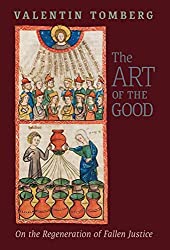
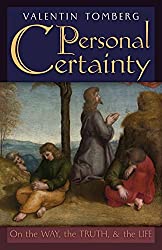
Classics from Valentin Tomberg
And as I continue this series of Unfinished Musings, I thought I would draw this more fully out, first by quoting from Foundations of International Law as Humanity’s Law:
“International law concerns all humanity and must therefore be linked to the whole of humanity’s culture. It is an organic component of the socio-cultural values of all humanity, like religion and morality. For theoretical purposes it may very well be treated separately from intellectual culture as a whole, but in practical reality it can never exist by itself …
Roman and canonical law matured for almost 2000 years, then international law began to separate from private law. The successive separation of law from metaphysics, i.e. philosophy, the divorce of philosophy from morality, the parting of morality from religion are not steps in the direction of progress, but steps in the direction of an increasing poverty of ideas and the narrowing of one’s horizon in regard to posed problems.
A “de-Romanised” international law, a philosophy of law “cleansed of metaphysics”, a “science liberated from morals” and a “detheologised philosophy” seem to characterise the time from the “Enlightenment” to the present and thus are manifestations of progress in the sense of advancing time, but not in the sense of increased profundity, expansion and exaltation of these concepts, ideas and ideals.
Just the opposite is true: the dominating tendency, especially since Kant, of a “clean separation of fields” did result in a separation of almost all fields from one another – a separation carried so far that professors of different faculties have so little to say to one another that they depend on the fodder delivered by the daily news.
This process occurred at the expense of general spiritual and intellectual culture …
When carried through to its ultimate conclusion, this tendency of separation will simply become a process of disintegration – i.e – death of true intellectual culture.
For if one does not stop at this point – and why should one? – having separated philosophy from religion, ethics from philosophy, science from philosophy and ethics, then the next step would be to separate science from logic, that is from judgment and conclusions; and subsequently from all abstract concepts, perceivable by the senses, just like toddlers!
The absurdity of following this tendency beyond the limits reached today is obvious – and still there is a desire and efforts expended in the direction of extinguishing that which is higher in favour of that which is lower.”
(Because the internet is a different medium than print, I have added paragraph breaks and italics for more easy assimilation of profound and challenging material from a monitor. Tomberg´s original emphasis is in bold.)
Yes here are indications of what is my mind and heart as I contemplate Global Warming. Valentin Tomberg returns again and again to the theme of degeneration through disintegration leading to loss of life. Often he is speaking of degeneration of culture and philosophy, but here in these books he is also speaking of law and order.
I spoke of Global Warming as a systemic tragedy, far beyond partial solutions such as activism. And so I see it – something that will demand everything of us – in terms of cultural life, philosophy and religion – and law and order.
Now as part of his response to the crippling decay of culture, Valentin Tomberg turned to both the Catholic Religion and the Study of Law.
And his writings and his life testify to the conviction that these domains could not be justifiably DIS-INTEGRATED.
Thus he speaks of law being originally based “on those sources to which human culture owes its awareness of what is truth and what is good, i.e. it based on a religious conception of the world. The latter was common to all “Christianity” at one time, and the aftereffect of this commonality is the present international community of mankind.”
Here he is indicating a view to the effect that present international law is something of a reduced shadow of Western Christian heritage and ethics, or at least owes a very great deal to it.
And yet he goes on to comment that there was a certain element within the West that did not succumb to a degenerated, disintegrated world-conception:
Only one part of divided humanity (divided into states, races, nations and classes) remained loyal to this common conception of the world, however and continues to maintain it across the globe: It is the Catholic Church, as the sole carrier and caretaker of “Christianity´s” tradition in the present and as the most universal representative of humanity’s Christian ideals today.
In the milieu from which Tomberg came, such a statement was indeed radical! As it will be for many today …
But for we, we who feel the joy, strength and life-force of the Catholic Tradition and the Sacraments, what are we to say if we feel we look out on a world in a terminally ill condition…?!
Must we defer for fear of offending secular sensibilities of political correctness (read: tyranny) and remain silent about what seems to us “the stone that the builder rejected”?! (cf. Luke xx 17)
That is to say the main corner-stone which has now been eliminated in countless contexts …
I will have more soon to say – however “unfinished” it may be. Tomorrow, perhaps. And I will be trying to suggest something of what Valentin Tomberg is saying of disintegration versus unity and life-force …
Two of My Own Videos on These Themes.
My Own Book Concerning Tomberg and Catholicism. Click to See on Amazon
Buying Books at Amazon Through These Links Gives Us a Commission. This Supports Our Apostolate. Thank You if You Can Help Us Like This!
2 responses to “Musings: Tomberg and Global Warming”
Edwin Shendelman
“Roman and canonical law matured for almost 2000 years, then international law began to separate from private law. The successive separation of law from metaphysics, i.e. philosophy, the divorce of philosophy from morality, the parting of morality from religion are not steps in the direction of progress, but steps in the direction of an increasing poverty of ideas and the narrowing of one’s horizon in regard to posed problems”
What an incredible paragraph! What more needs to said? An almost-perfect summary of our problems. But how do we go forward without trying to re-live what is already past?
roger
Thank you, Edwin.
How do we go forward indeed?
This most profound of questions is obviously one that cannot be answered in a soundbite. It is so huge that every day of my life is involved with struggling with it, as I imagine yours may well be, too. This whole website is bound up with this question.
We cannot mechanically re-live what is past, but we can try to live that which has eternal value within certain things given in the past.
Just one example of what I have mind here – just one – are the Sacraments.
Paul VI tried to change the Mass with the aid of a stopwatch apparently. That is, I have heard a report I judge reliable (from George Weigel) that in the Vatican the new Mass was devised by “experts” with stopwatches in hand …
But tradition does not develop through utilitarian innovation. How many seconds can we allow the Agnus Dei now that it is in the vernacular …?
No, tradition develops by those who are loyal to the inspiration of the past, but who are open to the inspiration – true inspiration, not utilitarian innovation – of the future.
We cannot “freeze the Tradition” in 1962 as the Holy Father has said – otherwise it will become pharasaic – deprived of Eternity. And not Tradition, which ever develops …
But we can cultivate a spirity of fidelity and reverence for the spiritual genius of the past and openness to the continued work of the Holy Spirit in the future.
These words I hope express a true Traditionalism.
And it seems to me that such true Traditionalism – sans the ignorance of the past perpetuated by contemporary “culture”, sans arrogant “knowing-better”, sans cynicism, irreverence, iconoclasm – is what must be cultivated.
Against the colossal forces of globalising capitalism, we must live it, we must educate for it, we must work to clarify the issues and our thinking and we must pray …

Comments
comments are currently closed
2 responses to “Musings: Tomberg and Global Warming”
“Roman and canonical law matured for almost 2000 years, then international law began to separate from private law. The successive separation of law from metaphysics, i.e. philosophy, the divorce of philosophy from morality, the parting of morality from religion are not steps in the direction of progress, but steps in the direction of an increasing poverty of ideas and the narrowing of one’s horizon in regard to posed problems”
What an incredible paragraph! What more needs to said? An almost-perfect summary of our problems. But how do we go forward without trying to re-live what is already past?
Thank you, Edwin.
How do we go forward indeed?
This most profound of questions is obviously one that cannot be answered in a soundbite. It is so huge that every day of my life is involved with struggling with it, as I imagine yours may well be, too. This whole website is bound up with this question.
We cannot mechanically re-live what is past, but we can try to live that which has eternal value within certain things given in the past.
Just one example of what I have mind here – just one – are the Sacraments.
Paul VI tried to change the Mass with the aid of a stopwatch apparently. That is, I have heard a report I judge reliable (from George Weigel) that in the Vatican the new Mass was devised by “experts” with stopwatches in hand …
But tradition does not develop through utilitarian innovation. How many seconds can we allow the Agnus Dei now that it is in the vernacular …?
No, tradition develops by those who are loyal to the inspiration of the past, but who are open to the inspiration – true inspiration, not utilitarian innovation – of the future.
We cannot “freeze the Tradition” in 1962 as the Holy Father has said – otherwise it will become pharasaic – deprived of Eternity. And not Tradition, which ever develops …
But we can cultivate a spirity of fidelity and reverence for the spiritual genius of the past and openness to the continued work of the Holy Spirit in the future.
These words I hope express a true Traditionalism.
And it seems to me that such true Traditionalism – sans the ignorance of the past perpetuated by contemporary “culture”, sans arrogant “knowing-better”, sans cynicism, irreverence, iconoclasm – is what must be cultivated.
Against the colossal forces of globalising capitalism, we must live it, we must educate for it, we must work to clarify the issues and our thinking and we must pray …